
Interactive Exhibition
Forest Ecosystem. All About the Trees
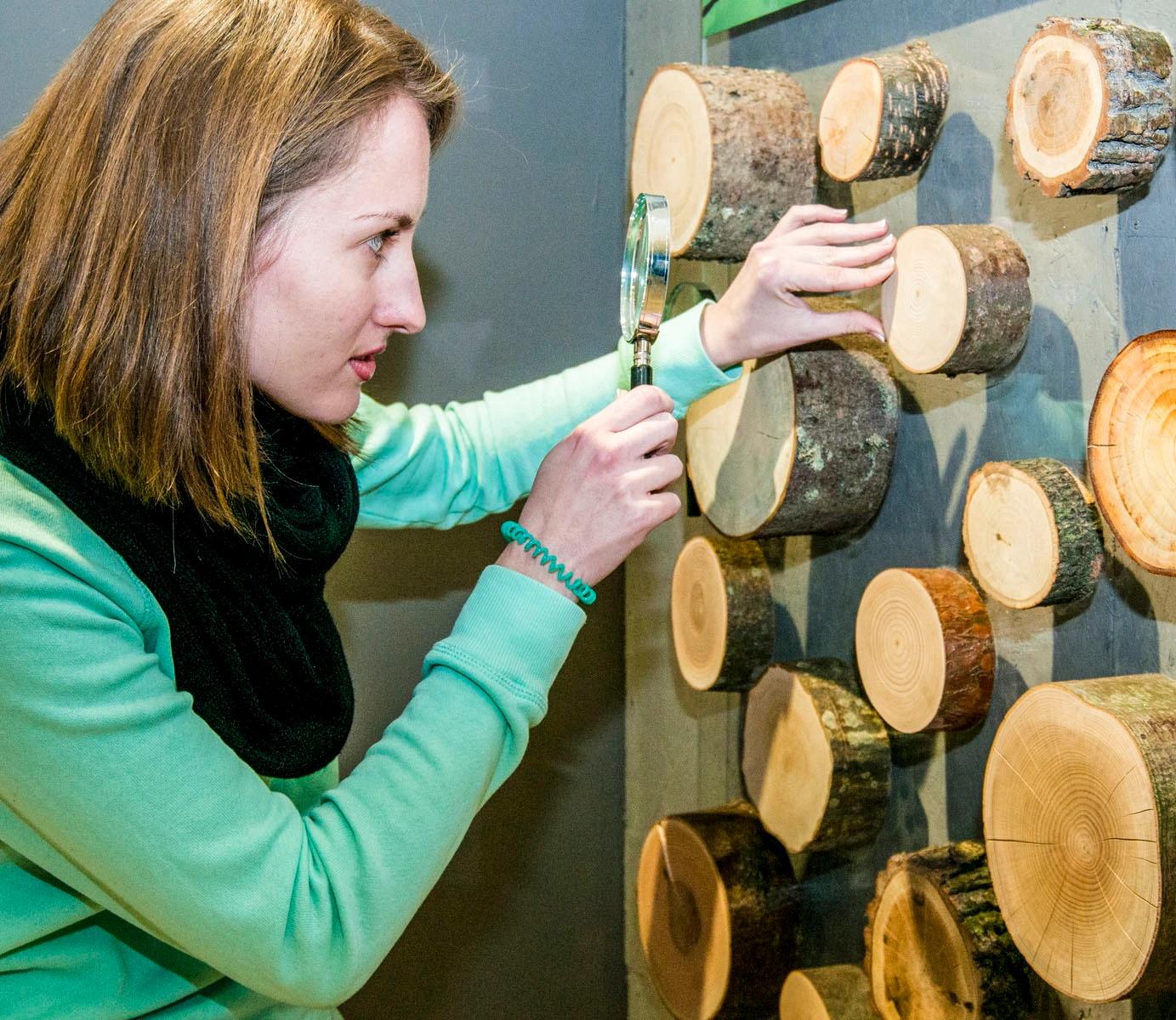
How to Determine the Age of a Tree. It is not difficult and do not need to have any additional tools. You can calculate the age of the tree by using the tree rings. At the stand you’ll find all tips and also will learn how you to determine the age of a tree using a special instrument – Pressler drill. This drill allows you to take a sample of wood from the tree bark to its core and accurately to calculate the annual rings. You will learn to establish its age by the number of annual rings while playing.
Tree structure. Do you know how do trees breathe? How to feed and to breed a tree? We invite you to informative and very simple botany lesson. A large image of a tree with the classified cells will tell you about this process and many other interesting things in the life of a tree. The infographics on the next stand will tell you in details about the role of a tree in the nature and our life.
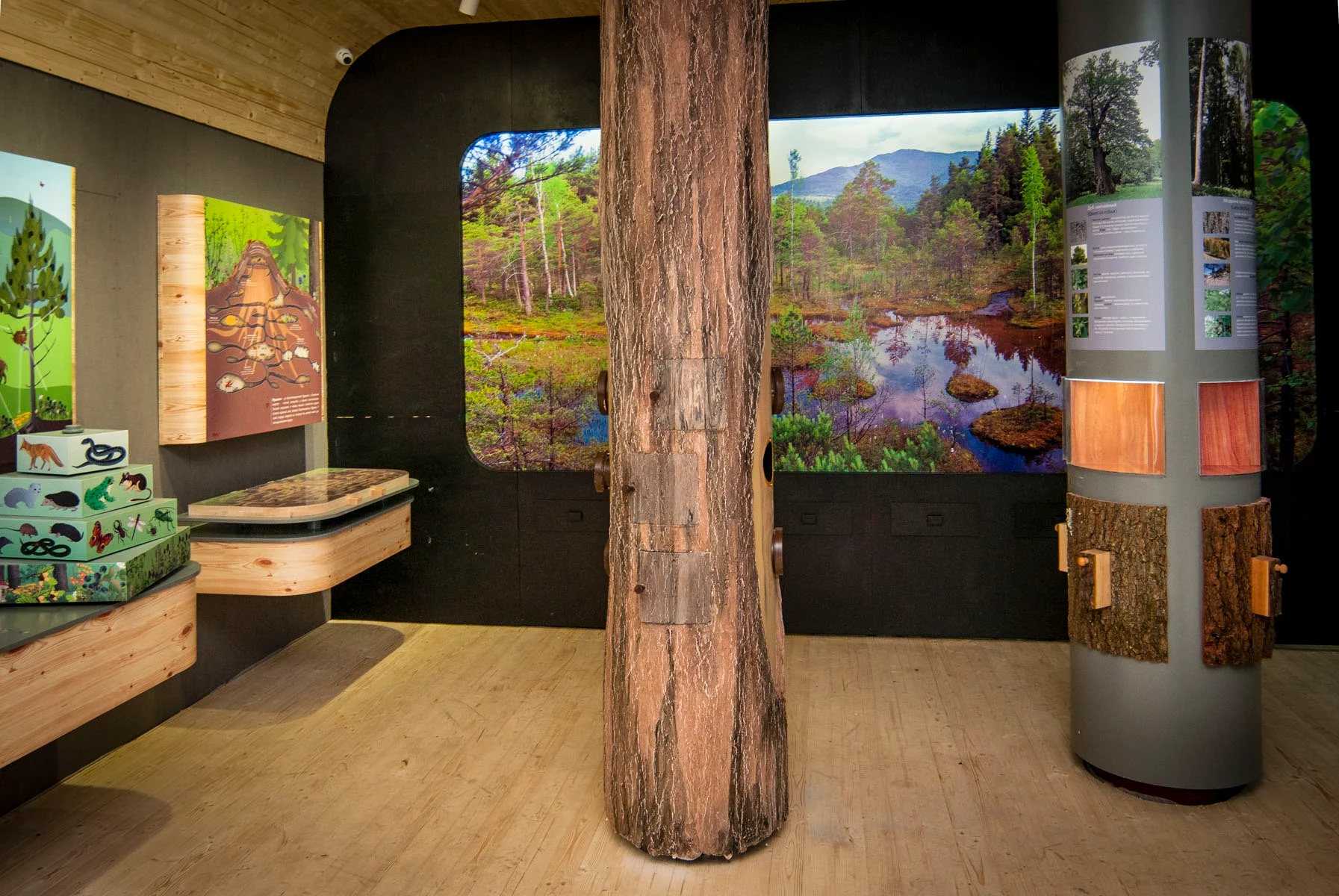
Stand-column ‘Tree’.
Learn about the appearance of, for example, the bark and fruit of the European beech tree, and also open the secret drawer to examine the structure of the tree you have selected.
Forest Ecosystem. The Amazing World of Animals
Forest Ecosystem Structure & Food Chain. Here the complicated scientific terms ‘food pyramid’ or ‘food chain’ will become so clear and obvious. Its always fun to play and learn about why do forests have so many kinds of plants and animals? what is the relationship between them?
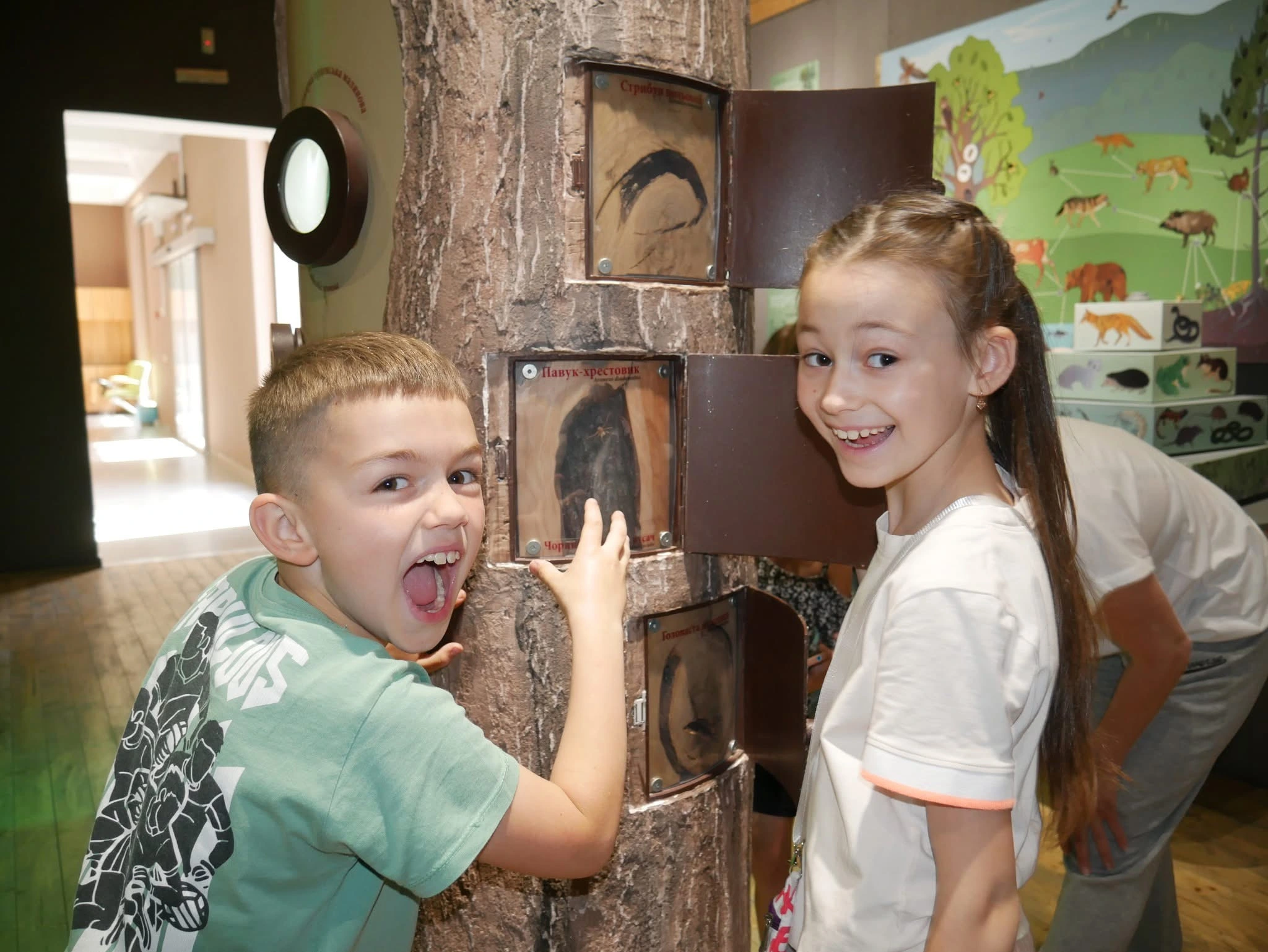
Tree Inhabitants & Pests. On the column that reproduces the real trunk of the tree you will find small and smart insects, bugs and butterflies – Carpathian trees inhabitants.
Beasts. Another column offers a new game – select an animal and find its traces, find its dinner menu. A light signal will appear when you do everything correctly.
Anthill. You may also play the role of an ant in the ‘Ant Hill’ game. Interpretive display with a detailed description of the anthill itself is extremely cognitive. However, it is just a tip for the game. Swing board vertically – roll the ball thought ant trails – find out how these little forest owners made their living..
Travel in the hole and in the hollow. Be a bird flying to a hollow in a tree trunk or a fox squeezing into a man-sized burrow.
Gather the bird. Next to the hole is placed a stand, where on the magnetic board are attached parts of birds- puzzles. By selecting the correct elements, gather the bird – one of the types that lives around Vyhoda.
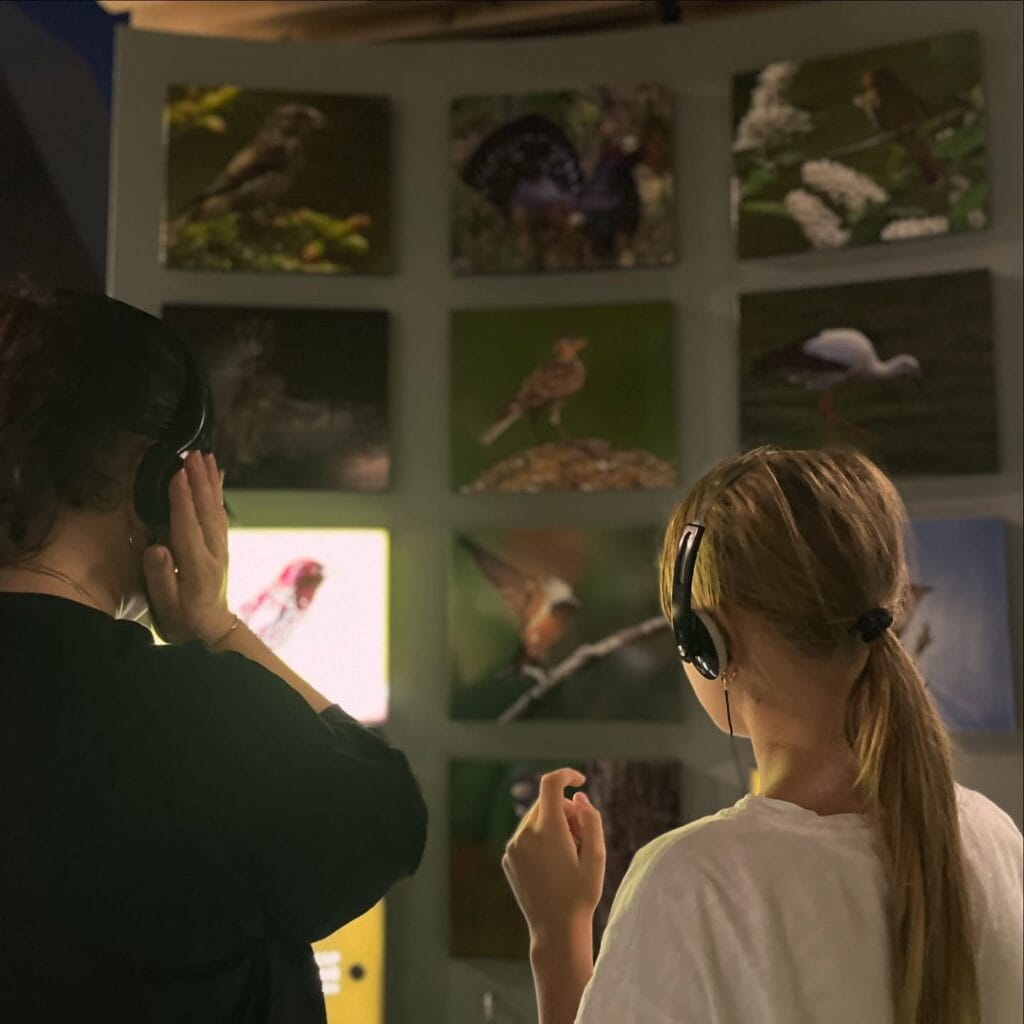
Bird Sounds. Using the adjustable headphones and corresponding buttons on the display, listen to the songs of birds that inhabit the Carpathians. Discover which of them migrate to other countries for the winter, and which stay, delighting us with their songs even in the cold months.
Forest Ecosystem. Incredible Swamp
Pay attention to the large image of a natural landmark that is unique to this area and completely atypical for the Carpathians — the Shyrkovets Marsh. This extraordinary place seems to be torn out of the usual Carpathian landscapes and is a haven for several dozen species of endemic wetland plants. The compartment-drawers in this photograph hide samples of Shyrkovets plants, which you can not only see but also experience by scent. This exhibit will not only captivate you but will also truly prepare you for an enlightening journey to Shyrkovets.
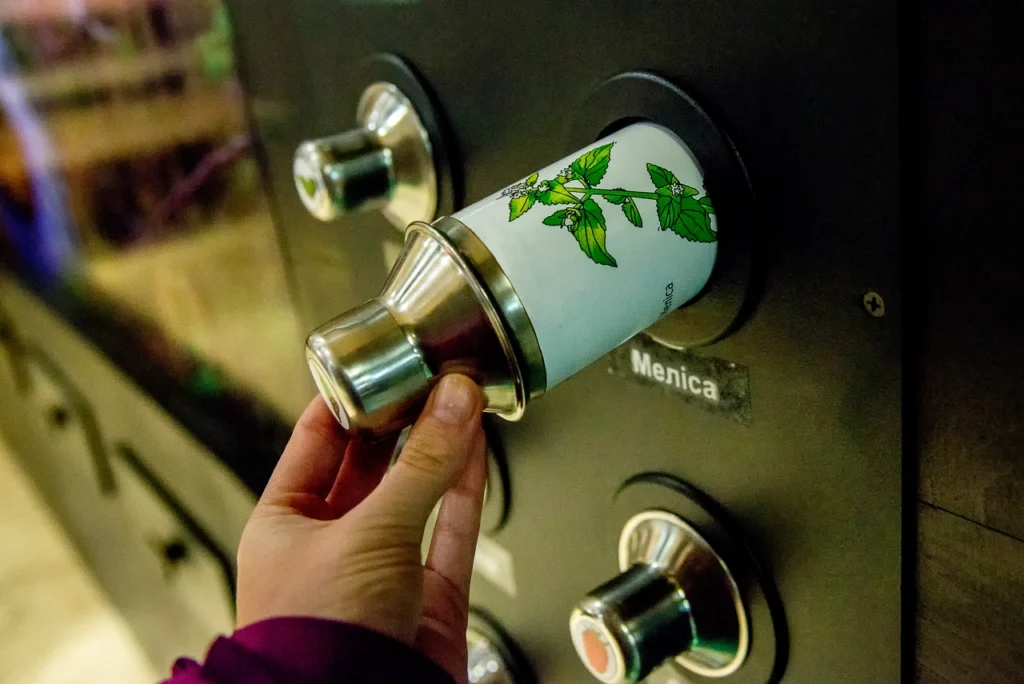
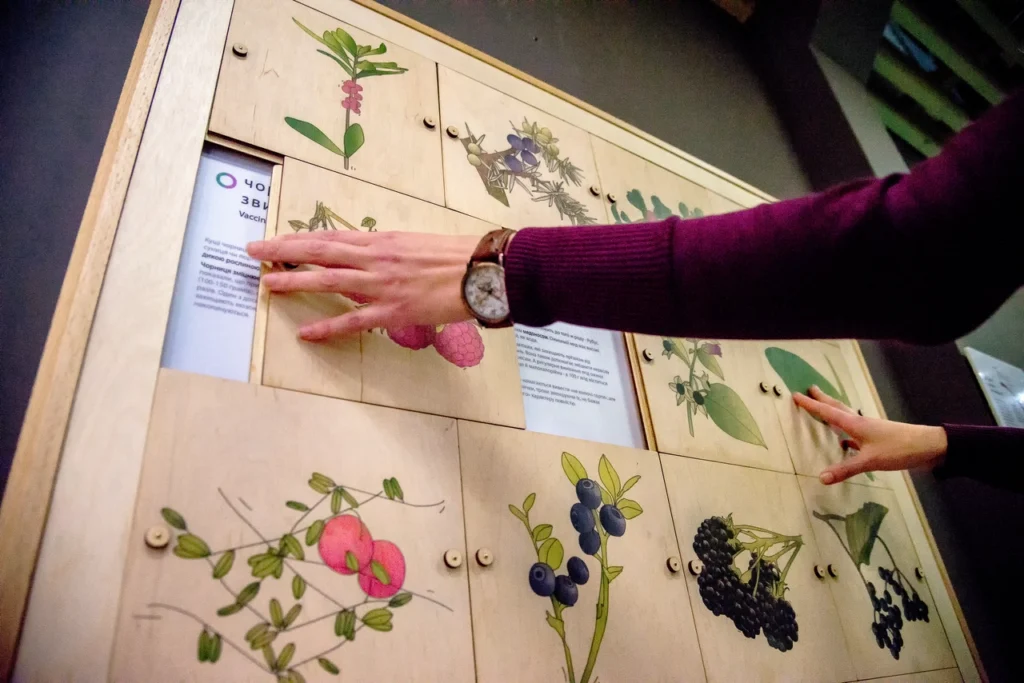
FOREST ECOSYSTEM. Interesting finds in the forest.
What can you discover while strolling through the forest? Find out by opening the hidden compartments and guessing what is presented inside them.
Mushroom and Berry “Fifteen Puzzle.”
By moving the puzzle sections horizontally and vertically, find information about the specific mushroom or berry species that grow in the Carpathians.
Timber Harvesting and Transportation. Forestry Practices
Model of ancient Boyko’s settlement. Familiarize yourself with the traditional architecture of the Boyko region through models of buildings and farm structures from the 19th century.
A prototype of the old steam locomotive on an authentic platform invites visitors to take a virtual journey following the itinerary of the Carpathian Tram. This route has been used to transport timber for more than 150 years already!
Steam Boiler. Look inside the steam boiler. Firewood (or coal) burned in the boiler to generate steam. The steam powered the wheels—this is how the locomotive came to life.
Steam Engine. Turn the handle, and the engine will spring into action! In a real locomotive, steam under pressure would be directed into a cylinder, where it moved the piston. The piston transferred power to the wheels, and the locomotive began its journey.
For more details on how the steam locomotive works, you can read about it on the display.
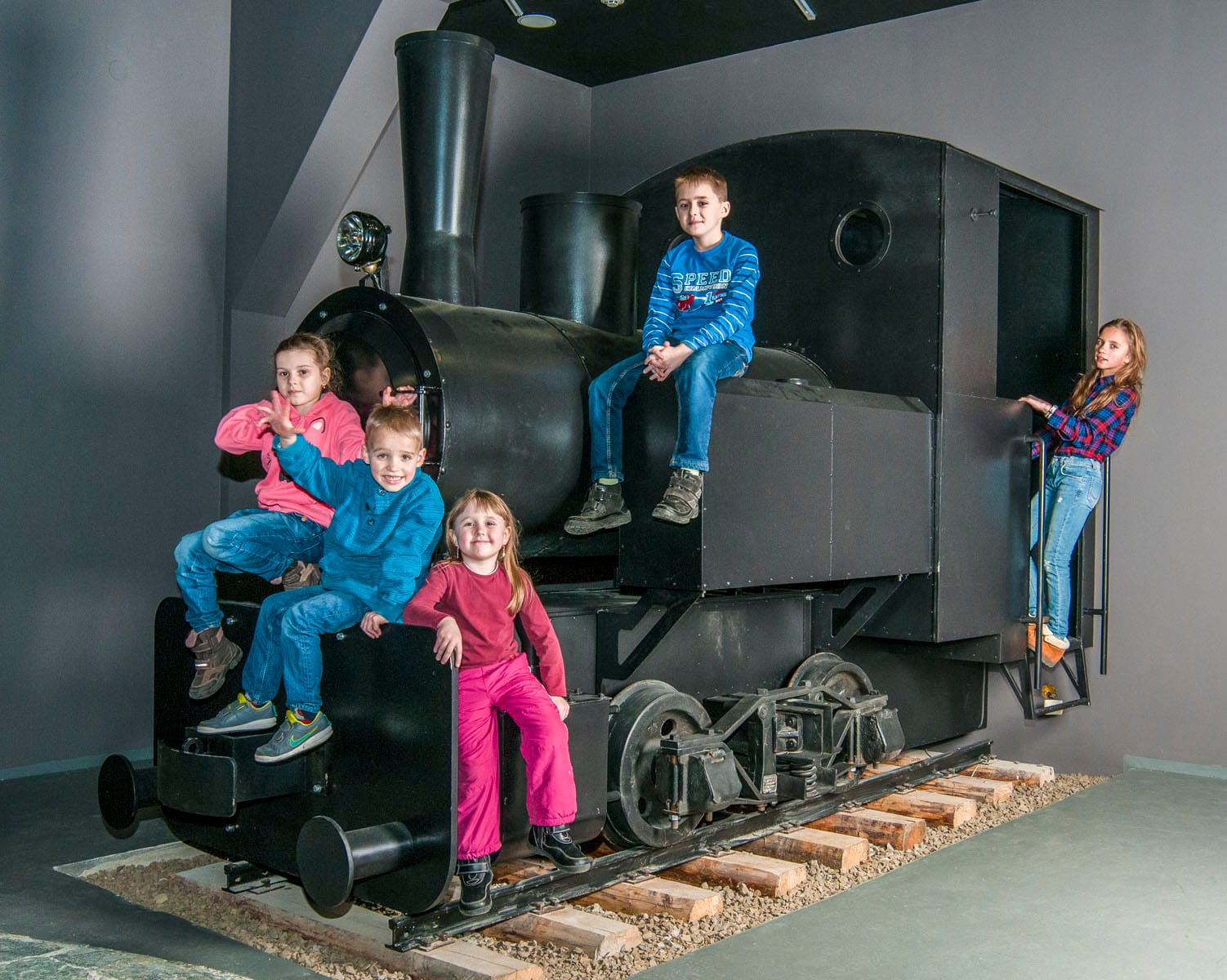
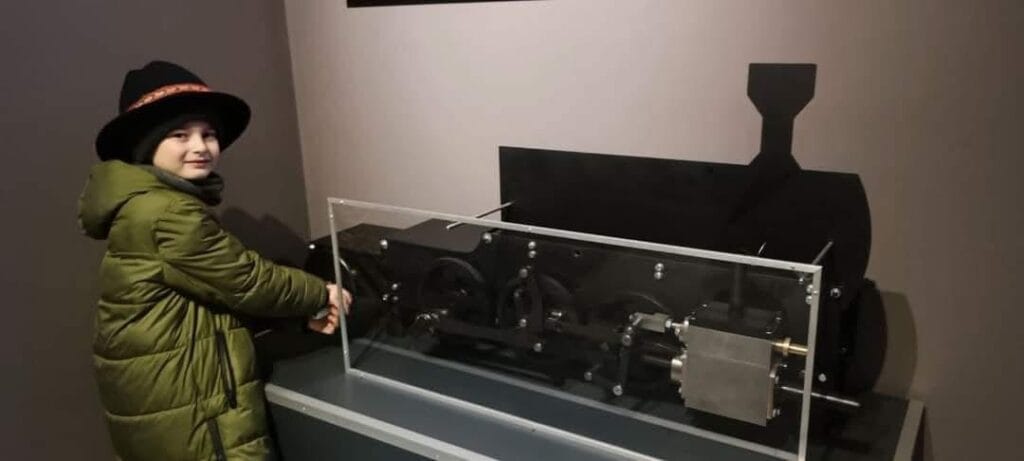
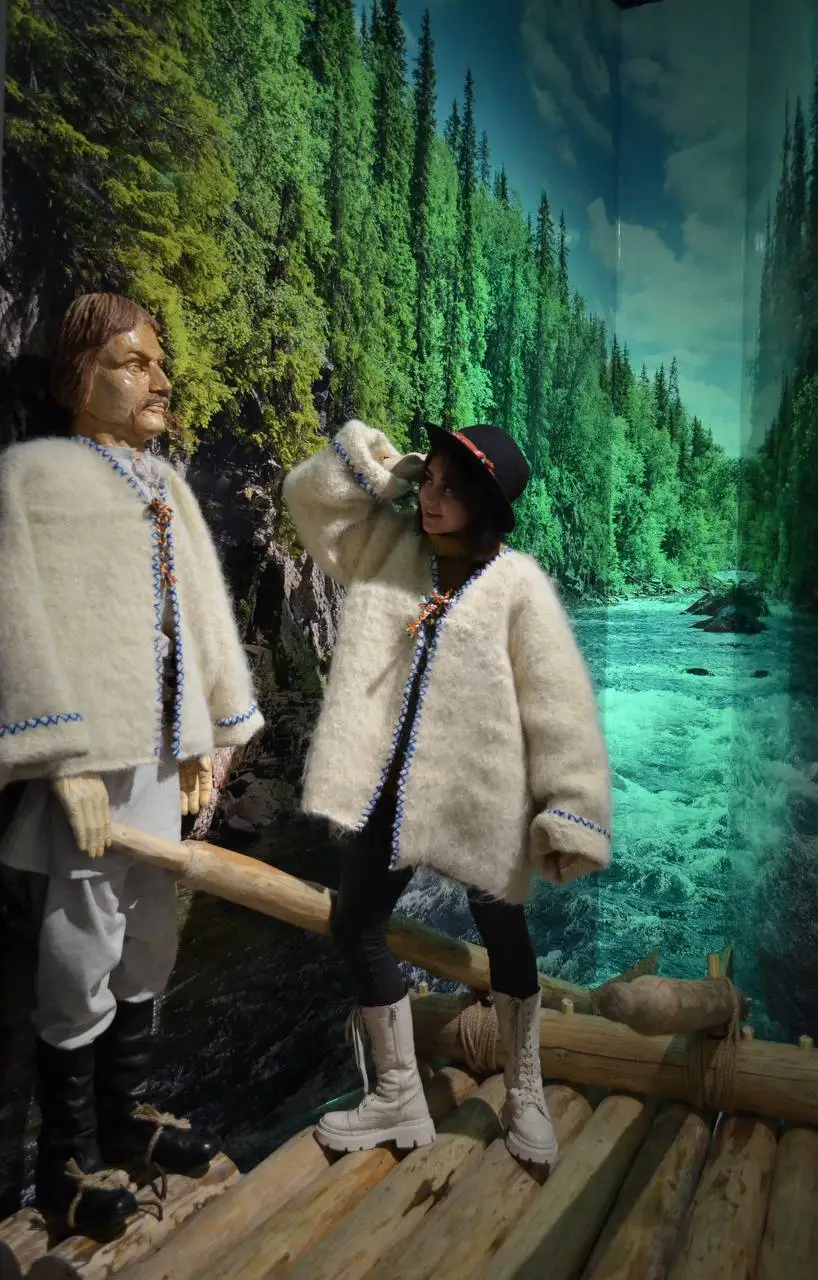
Exhibit “Bokorashi: Reviving the Forgotten History of Timber Rafting”
Only a fearless, adventure-loving young man could become a bokorash—a timber raftsman. No matter how strong you were, if you felt fear, you wouldn’t dare step onto the raft, pick up the oar, or navigate a torrent flowing at 50 kilometers per hour.
Now it’s your turn to try the role. Put on the traditional outfit of a bokorash and jump onto the life-sized model of a bokor—a raft just like those brave men used to ride down the rushing Carpathian rivers seventy years ago.
In just fifteen minutes, discover twenty old, nearly forgotten words. Along the way, you’ll naturally learn the anatomy of a timber raft and enrich your knowledge of history—exploring the distinctive clothing of the bokorashi and the extreme conditions of their workday.
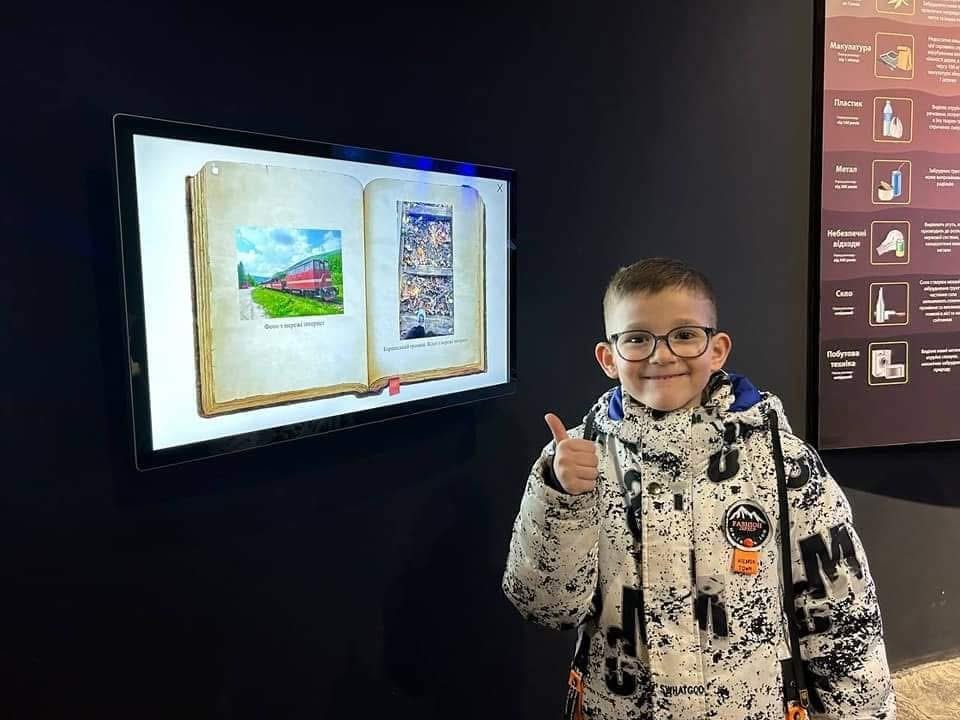
Interactive Screen
On the touchscreen, you can select one of four carriages. Each one contains interesting information about the founder of the narrow-gauge railway, the building of the Center, the railway itself, and the tourist route.
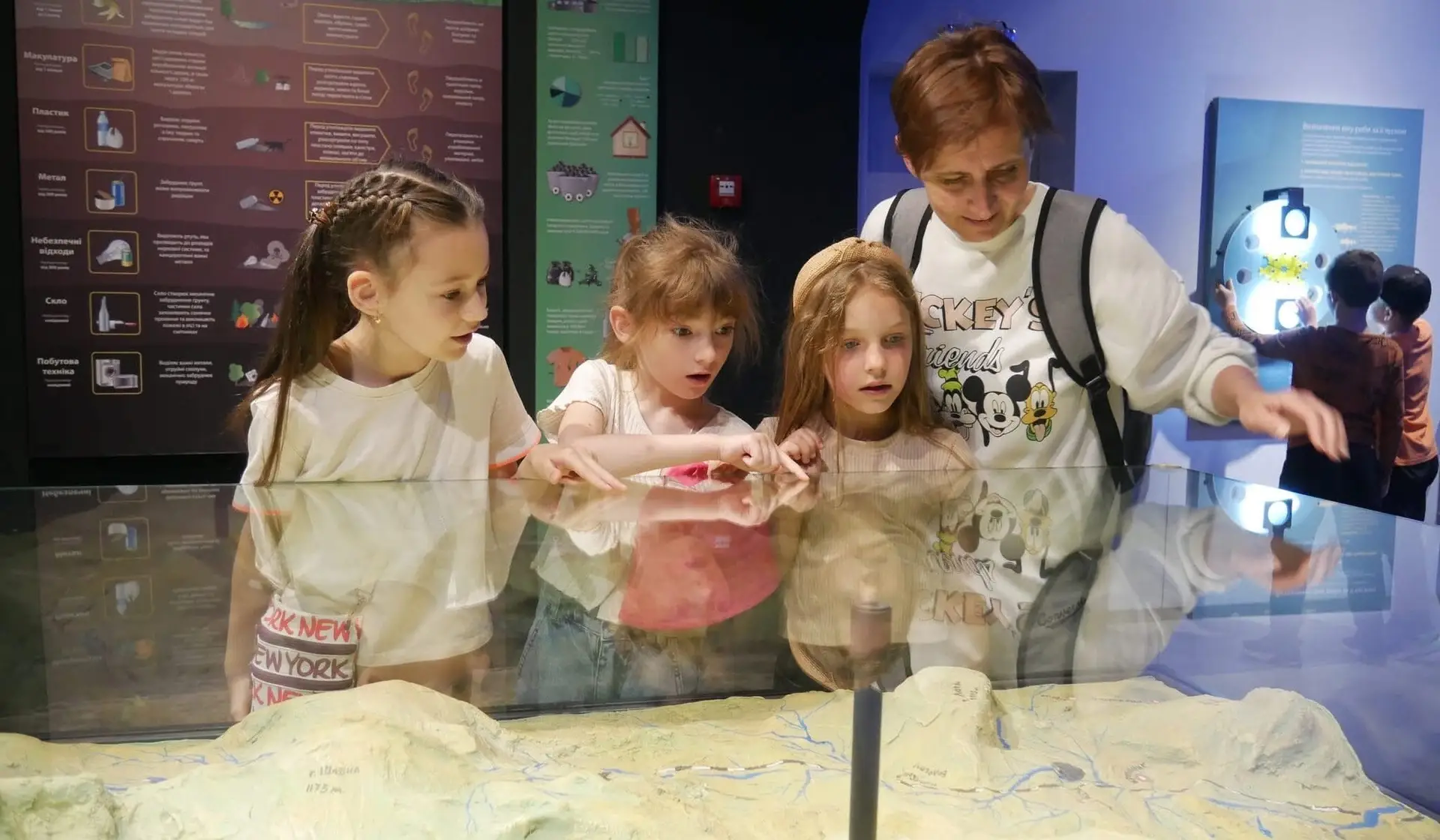
Terrain Model
Now take a moment to appreciate the scale of the journey. On the terrain model, you can see all the branches of the Vyhoda Narrow-Gauge Railway, along with the surrounding landscape and topography.
River Ecosystem. River Wealth
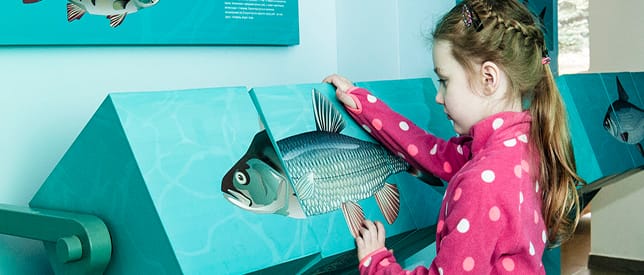
Another part of exposition reflects the crystal-clear Carpathian mountain streams. Cubes that can be easily rotated and show painted shapes of various freshwater fishes that live in Svicha and Mizunka Rivers.
Opposite this image, you’ll find a set of movable cubes with differently illustrated faces. This interactive educational game, called “Assemble the Fish,” invites children to piece together various types of fish by matching their body parts on the cube faces. It’s a favorite among young visitors.
Above the game, there is detailed information about each fish species featured in the puzzle—an engaging addition for adult visitors as well. All of these fascinating and exotic species inhabit the local rivers, the Svicha and Mizunka.
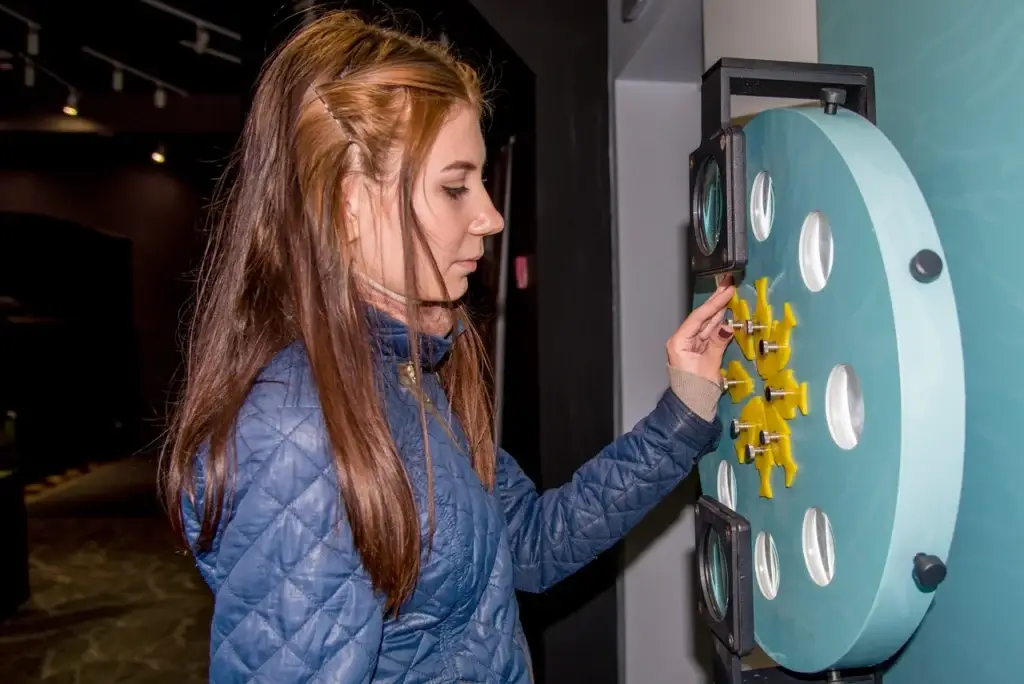
Fish Age Determination. Determine the age of a fish by examining the annual growth rings on its scales using a magnifying rotating drum. Test your skills by comparing with the reference fish samples — rotate to reveal or hide them as needed.
The Vyhoda Film
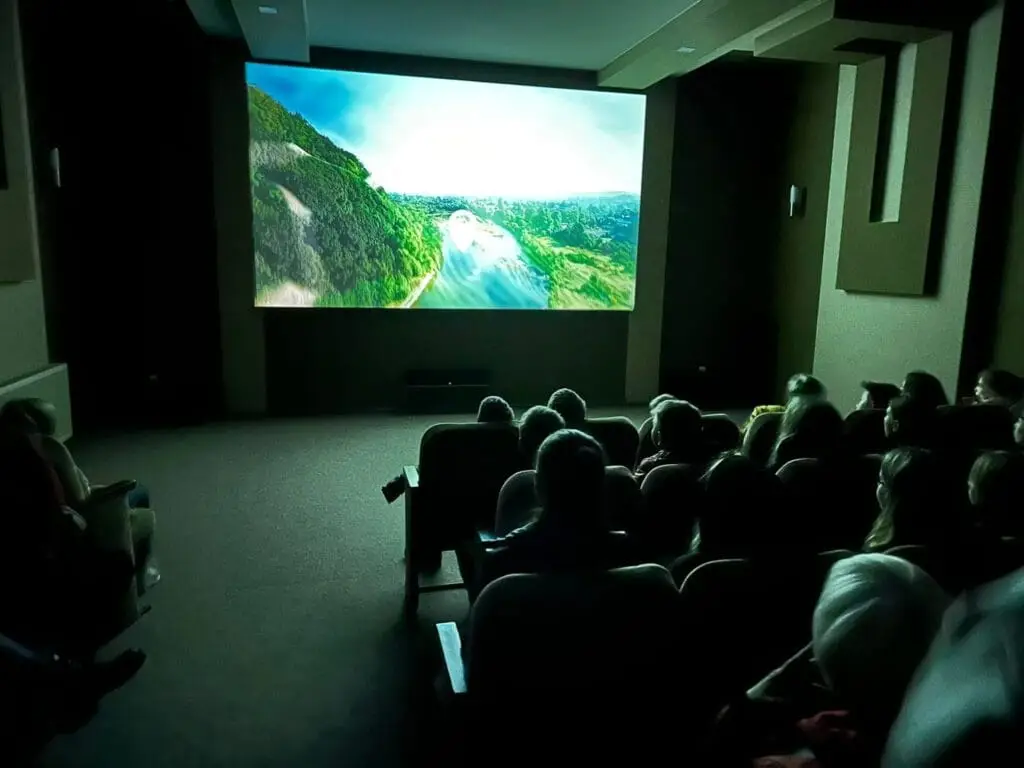
Exclusively at the Heritage Center, you can watch this 19-minute film that takes viewers on a captivating journey through the history of the region—from prehistoric times to the present day. The film offers a vivid introduction to the world of the local people, the Boiky, helping audiences understand the roots of their way of life, the charm of their simple traditions, and the unique role the narrow-gauge railway has played in shaping their daily experiences. Screened in the Center’s modern cinema, the film is available in Ukrainian, English, Polish, and German.
Contacts
Vyhoda Narrow-Gauge Heritage Center
66 Danylo Halytskyi Street, Vyhoda, Kalush District, Ivano-Frankivsk Region
With the support of

This website was developed with the support of the Ukrainian Cultural Foundation as part of the “Cultural Heritage” grant program